When original art is unavailable, purchasing asset packs is the most direct solution. In practice, however, the purchase is only the beginning. Most of the work comes afterward.
Across hundreds of packs, each containing tens or hundreds of images, naming and file formats vary widely. Using one creature in the game requires locating it, confirming its animation set, splitting the source into a game-readable atlas, and aligning the baseline of its feet. Finding one asset takes minutes; maintaining the collection requires a stable process.
From asset pack to usable atlas
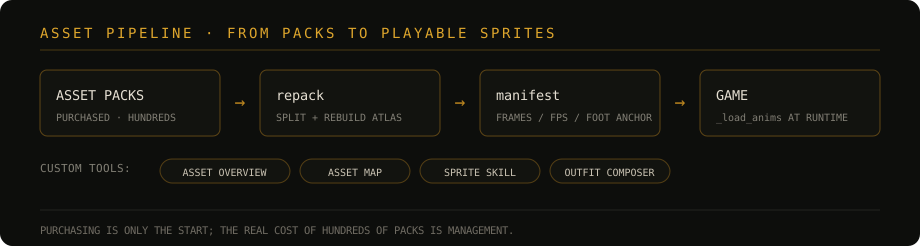
I built a pipeline around that process. A repacking script splits and rearranges each purchased sprite sheet into a standard atlas. It then generates a manifest recording the frame count and frame rate of each animation, together with the position of the feet in every frame. Side-view characters must remain grounded; an inaccurate foot anchor makes them appear to float. The game reads the manifest to play the animation correctly. Once an asset is configured, replacing it only requires running the pipeline again.
Management tools: making assets searchable
The difficult part is not splitting images but making several hundred packs searchable. I use a small set of visual tools for the collection:
- Asset overview board: a card wall showing the contents of every pack, candidates for elites or bosses, and assets not yet in use;
- Asset mapping: a lookup between entities and their source files, such as Vera’s current sprite or the asset assigned to a particular chest;
- Sprite-sheet skill: a reusable process for generating game sprite sheets, including style, animation set, and foot-anchor configuration;
- Outfit compositor: layered selection, recoloring, and frame-by-frame preview, producing a new character sheet from a recipe JSON file.
Why asset work needs its own tools
Building tools for assets may appear separate from game production, but the return compounds. An overview board reduces every later search; an outfit compositor removes repeated work from every new NPC. Solo development needs to convert recurring tasks into one-time investments wherever possible, or maintenance will continue to consume the available time.
Note: most current assets are temporary
Most assets currently used in the game are temporary placeholders. Purchased general-purpose sprites allow the project to establish its flow and test combat feel, but many will later be replaced by art more specific to Watchman’s visual direction.
That does not reduce the value of the management pipeline. Individual assets can change while the system for managing them remains. As with model workflows, the concrete resource can be replaced without rebuilding the production stack.